Refrigeration Servicing in Newcastle & the Hunter
For a business that depends on cold, servicing isn't maintenance — it's risk management. Here's what a commercial refrigeration service actually does, and how it stops the failures that cost stock.
Servicing Newcastle, Lake Macquarie, Maitland, the Hunter Valley and Port Stephens
By Sebastian Chum · Published October 2026 · Updated October 2026

Licensed & certified technicians
ARC Refrigerant Licence
AU 39843
Contractor Licence
209362C
Overview
Refrigeration servicing is the planned maintenance of cold systems that are still holding temperature — to keep them efficient, to catch the slow failures before they become stock-loss events, and to keep a business compliant with its food-safety and storage obligations. It is, for a commercial operator, the most important regular work on the premises.
Commercial refrigeration works harder and in worse conditions than almost any other equipment on a site. A condenser in a hot kitchen, a freezer coil that defrosts several times a day, doors that open every few minutes — these mean a system drifts from its set points continuously. Without servicing, that drift becomes a failure; with servicing, it's corrected before anyone notices.
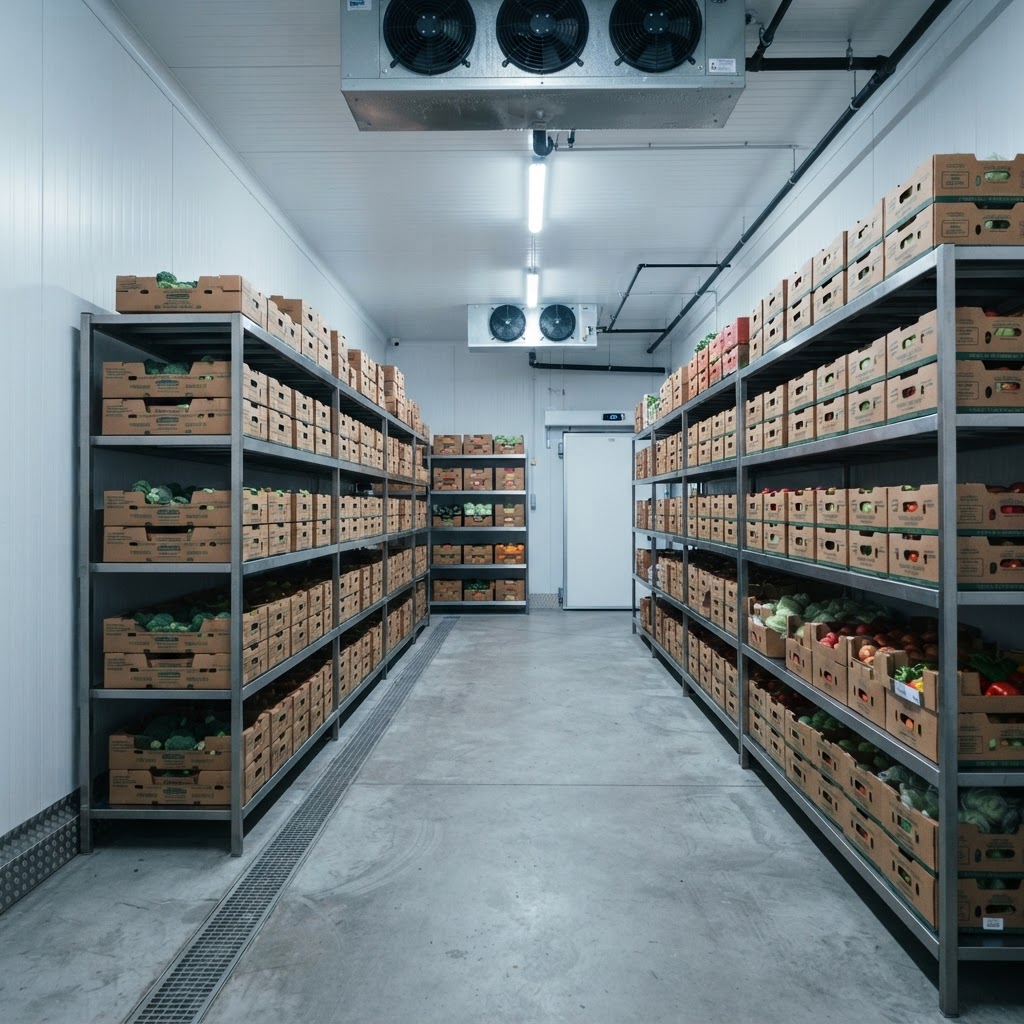
Polar services cool rooms, freezer rooms, display cases, ice machines and cold plant across Newcastle, Lake Macquarie and the Hunter. This page explains what a proper commercial refrigeration service covers, the cost of skipping it, and how a service schedule is set to the site.
The problem
Unserviced commercial refrigeration doesn't fail cheaply. Here's what accumulates between services when they're skipped:
- Condensers foul with kitchen grease and dust, raising head pressure and running costs long before any alarm.
- Defrost cycles drift out of adjustment, letting ice build until the coil blocks and the room warms.
- Door seals and strip curtains perish, so the unit runs continuously and ices up to compensate.
- Refrigerant leaks go unnoticed, dropping capacity until the first hot day the room can't hold set point.
- Drains block with biofilm, overflowing onto floors or, worse, freezing into the coil.
- Compressors run ever-harder against fouled condensers and iced coils, shortening the life of the most expensive component.
- Compliance and food-safety records fall behind, because there's no documented evidence the cold chain was maintained.
The businesses that never lose stock to refrigeration are the ones on a service schedule. The ones that do always say the same thing: 'it was running fine yesterday.' It was — it was just running harder than it should have been, and nobody was watching.
Understanding it
A commercial refrigeration service is really five jobs done together. Understanding each shows why it's a half-day's work, not a ten-minute look.
Condenser cleaning
The condenser rejects the heat the room absorbs, and in a kitchen it traps grease and dust fast. A blocked condenser raises head pressure, increases running current, and is the single most common cause of premature compressor failure. Cleaning it — properly, with the right degreaser and method — is the highest-return task in a refrigeration service.
Defrost verification
We check that defrost is initiating, running for the right duration, and terminating correctly. A defrost that runs too long wastes energy and warms the product; one that terminates too early lets ice build until the coil blocks. Getting defrost right is the difference between a freezer that runs for a decade and one that fails every summer.
Refrigerant and operating check
We measure suction and discharge pressures against the room temperature, check superheat and subcooling where relevant, and log compressor current. A system slowly losing charge shows up here long before the room warms — turning a breakdown into a planned repair.
Doors, seals and drains
We inspect door seals and strip curtains, clear and flush condensate drains, and check the room holds temperature with the door closed. A perished seal or a blocked drain is a cheap fix that prevents an expensive one.
Monitoring and compliance
For commercial and food-safety sites, the service record is your evidence that the cold chain was maintained. We log readings, findings and recommendations each visit, and flag anything that needs attention before the next one.
It was running fine yesterday. Yes — running harder than it should have been, with nobody watching.
The solution
A commercial refrigeration service follows a documented checklist tuned to the site. Here's what we do each visit:
- 01
History and trend review
We compare this visit's readings to the last — a rising head pressure or climbing current is an early warning, even before anything reads 'fault'.
- 02
Condenser and coil clean
Condensers cleaned of grease and dust, evaporator coils checked for ice and fouling, and airflow verified restored. In a hot kitchen this alone can prevent the next breakdown.
- 03
Defrost verification and set-up
We confirm defrost initiates, runs and terminates correctly, and adjust frequency and duration to the season and the load. Iced coils are cleared and the cause fixed, not just melted.
- 04
Refrigerant, electrical and mechanical check
Pressures, superheat and compressor current measured and logged; electrical connections tightened; fans, defrost heaters and controls tested; door seals and drains inspected and cleared.
- 05
Service record and recommendations
You receive a written log of readings, findings and recommendations — suitable for food-safety and compliance evidence, and your guide to what to watch before the next visit.
Done on a schedule set to the site, servicing keeps commercial refrigeration at its designed capacity, prevents the failures that cost stock, and maintains the compliance record a food business is required to keep.
Need this sorted?
Get a clear quote or book a service with Polar.
Explore related services







Further reading, tools & calculators
Answer-first guides and calculators written by our team, so you can decide before you book.





Frequently asked questions
When was your cool room last serviced?
Book a planned service and protect your stock before the next hot day.