Commercial Refrigeration in Newcastle & the Hunter
When your business depends on cold, a refrigeration failure is a stock-loss event, not an inconvenience. Here's what commercial refrigeration actually involves, where it fails, and how it's kept reliable.
Servicing Newcastle, Lake Macquarie, Maitland, the Hunter Valley and Port Stephens
By Sebastian Chum · Published October 2026 · Updated October 2026


Licensed & certified technicians
ARC Refrigerant Licence
AU 39843
Contractor Licence
209362C
Overview
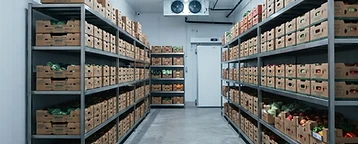
Commercial refrigeration covers the cooling systems a business relies on to keep product cold or frozen — cool rooms, freezer rooms, display cases, serve-over counters, blast chillers, ice machines and cold-storage plant. For a café, supermarket, florist, restaurant, brewery or medical facility, the refrigeration is the business. When it stops, stock starts warming within hours.
Unlike residential air conditioning, commercial refrigeration runs hard, often continuously, in hostile environments — hot kitchens, humid cool rooms, frequent door openings, heavy product loads. It is sized, built and maintained to a completely different standard, and the cost of getting it wrong is measured in lost stock, lost trading and lost reputation, not just a repair bill.
Polar Refrigeration & Air Conditioning designs, installs, services and repairs commercial refrigeration across Newcastle, Lake Macquarie and the Hunter. This page explains how commercial systems work, where they fail, and what 'doing it properly' actually means for a business that depends on cold.
The problem
Commercial refrigeration faults cost more than the repair — they cost the stock, the trading time, and sometimes the compliance record. Here's what goes wrong when commercial cold is undersized, unmaintained or poorly built:
- Undersized plant that can't pull a fresh load down to temperature in time, leaving food in the temperature danger zone and risking a food-safety breach.
- Hot, humid kitchens with no clearance around the condenser, so the unit recirculates its own heat and trips on high pressure during service.
- Door seals and strip curtains perished or missing, so the cool room runs continuously, ices up, and the compressor wears out early.
- Blocked condensers full of kitchen grease, dropping capacity until the first hot day the system can't hold temperature.
- Defrost failures that let ice build up on the evaporator until the coil is a solid block and the room warms despite the compressor running flat out.
- Refrigerant leaks in inaccessible pipework that go unnoticed until capacity drops and stock temperature creeps up.
- No monitoring — the first sign of a problem is a delivery of ruined stock, because nobody knew the room drifted overnight.
Every one of these is preventable. The businesses that never lose stock to refrigeration are the ones that sized the plant properly, maintain it, and know the moment a room starts to drift — not the ones that just hope it keeps running.
Understanding it
Commercial refrigeration is a different discipline to air conditioning, even though both move heat. Here's what makes it different:
Load pull-down, not just holding
An air conditioner holds a comfortable temperature in a stable room. A commercial cool room often has to pull a warm delivery down to 2°C in a set time, with doors opening and closing, in a 35°C kitchen. The sizing has to account for product load, door-open infiltration and the heat of the kitchen — not just the room volume. Get this wrong and the system runs forever and never reaches set point.
Defrost and ice management
Below-zero freezer rooms build ice on their evaporator coils by design, and that ice has to be cleared on a controlled defrost cycle. A failed or mis-set defrost lets ice accumulate until the coil is blocked and cooling stops. Defrost setup — frequency, duration and termination — is one of the most critical and most neglected settings on commercial plant.
Condenser environment
The heat a cool room removes has to go somewhere — into the kitchen, onto a roof, or to a remote condenser. A condenser in a hot, greasy, airless corner can't reject heat and the whole system suffers. Locating, clearing and cleaning condensers is where most commercial capacity losses come from.
Monitoring and alarm
Commercial cold needs to tell you before it fails. Temperature monitoring with alarm outputs — to a phone, a BMS, or an autodialler — turns a silent overnight drift into a 2am phone call you can act on, instead of a morning of ruined stock. It's the single highest-return addition to any commercial cold system.
In commercial refrigeration, the cost of the failure is never the repair bill. It's the stock, the trading time, and the compliance record.
The solution
Keeping commercial refrigeration reliable is a combination of correct design, planned maintenance and monitoring. Here's how we approach it:
- 01
Load and site assessment
We assess the product load, door-open frequency, kitchen temperature, room construction and clearance to size plant that will actually pull a fresh load down in time — not just hold an empty room. For new builds we specify the room, the plant and the condenser location together.
- 02
Correct installation and commissioning
We build and commission cool rooms and freezer rooms with correctly set defrost, properly graded drains, sealed doors and condensers located to reject heat — and we hand over with the operating set points recorded.
- 03
Planned maintenance schedule
We set a servicing frequency to the site — typically monthly for hot, greasy kitchens and quarterly for lighter loads — covering condenser cleaning, defrost verification, refrigerant charge, door seals and drain clearing. Each visit is logged and trended.
- 04
Monitoring and alarm
We recommend and install temperature monitoring with alarm notification, so a drifting room warns you before stock is at risk. For high-value or compliance-critical cold (food, medical, pharmaceutical) this is non-negotiable.
- 05
Rapid repair response
When a fault occurs, commercial and stock-critical sites are prioritised. We diagnose to the component, protect stock where possible, and carry the common commercial parts to complete most repairs in one visit.
Together this is what 'reliable commercial refrigeration' means — a system sized to its real load, maintained so it doesn't drift, monitored so it warns you, and supported by a rapid response when it needs it.
Refrigeration and air conditioning for your industry
Every sector fails differently. Choose yours for the risks we see on site, what they cost and how the work is run.
Need this sorted?
Get a clear quote or book a service with Polar.
Explore related services







Further reading, tools & calculators
Answer-first guides and calculators written by our team, so you can decide before you book.





Frequently asked questions
Does your business depend on cold?
Get a planned-maintenance plan and monitoring that protects your stock.